consent_cookie
Duración: 1 year
Stores the user's cookie consent state
02-06-2026
Since 1 January 2025, the European Union has obliged municipalities in Member States to ensure the separate collection of textile waste and to move towards increasing reuse and recycling targets. In Spain, this new obligation was to translate, in principle, into an increase in the separate collection of used clothing and a consolidation of the textile management system. However, the current context of the sector is leading operators such as Humana to progressively reduce their container network to preserve the economic sustainability of the activity.
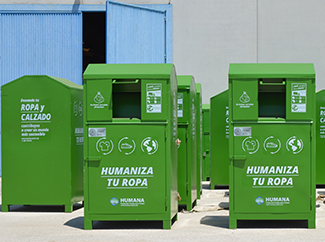
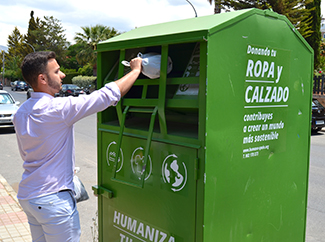
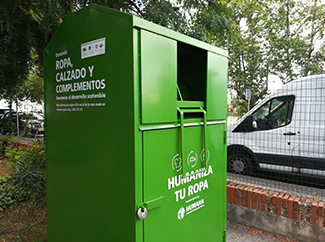
Traditionally, the growth in the number of containers installed on public roads has been a reflection of the consolidation and maturity of the sector. Humana went from having just 30 containers in 1987 to more than 5,000 collection points throughout Spain by the end of 2025. However, in recent months our strategy has had to adapt to a new market reality, marked by the need to optimise operations and reduce presence in those territories where the right conditions are not in place to guarantee sustainable management of textile waste.
The textile reuse and recycling sector is going through a deep structural crisis. The growing presence of very low quality garments with a short useful life, the increase in ultra-fast fashion, the fall in the value of used textiles in international markets and the sustained increase in operational and regulatory costs are seriously stressing the economic viability of the activity. It is becoming increasingly expensive to collect and treat waste whose recovery value is progressively decreasing.
For years, textile waste management was based on a model in which operators assumed the costs of collection and treatment thanks to the value generated later by reuse and recycling. However, the current context has changed significantly.
In this scenario, it is necessary to move towards models of greater co-responsibility between administrations, producers and managers, especially where selective collection no longer allows the real costs of the service to be covered. In our case, and from a logic of responsibility and financial sustainability, we have been forced to rethink the continuity of activity in certain municipalities.
Naturally, we understand that local administrations also operate under significant budgetary constraints and in a changing regulatory context. Precisely for this reason, we are confident that the implementation of Extended Producer Responsibility (EPR) for textiles and footwear will allow us to evolve towards a more balanced, stable and co-responsible system, aligned with the spirit of European and national legislation. Both producers and administrations are called upon to play an active role in the financing and organization of the management of this waste.
Humana will continue to work to preserve an activity that generates significant environmental and social benefits: extending the useful life of textiles, reducing emissions and waste, generating employment and financing sustainable development projects. To this end, it will be essential to build a management model adapted to the new economic reality of the sector and capable of guaranteeing its long-term viability.