consent_cookie
Duración: 1 year
Stores the user's cookie consent state
05-10-2026
On World Teachers' Day 2026, Humana People to People celebrates every teacher and reaffirms our commitment to protecting and advancing the teaching profession. Every learner deserves qualified, supported, and respected teachers. Quality education cannot exist without a strong teaching profession.
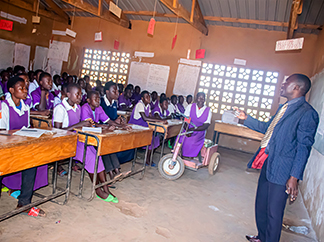
Humana People to People acknowledges that teachers working in rural and underserved communities often transform lives in challenging circumstances. In these communities, the teacher is one of the learner's role models, and most teachers in rural Sub-Saharan Africa face high student-teacher ratios.
The global teacher shortage is no longer a looming shadow; it is one of the most pressing disruptions facing education today. To meet universal education goals by 2030, the world urgently needs 50 million more educators.
At Humana People to People, our decades of experience running Teacher Training Colleges have demonstrated a fundamental truth: teacher shortages are a policy choice and can be prevented. They are fuelled by systemic underfunding, poor working conditions and a lack of support, particularly in rural and disadvantaged communities.
70,000 primary school teachers
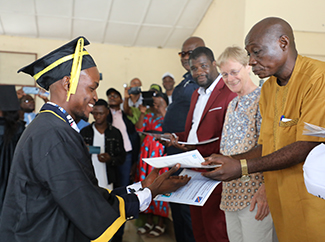
Solving this crisis requires more than filling classrooms with bodies; it requires transforming how we prepare educators to thrive. Since 1993, Humana People to People has trained nearly 70,000 primary school teachers across sub-Saharan Africa and India.
Our 55 Teacher Training Colleges collaborate directly with national governments to train passionate, community-driven primary school teachers who are also agents of local community development. We combine rigorous theory with deep, hands-on practice. This model ensures that graduates do not merely manage a syllabus - they actively uplift rural realities, engage communities as equal partners, and foster highly inclusive learning environments.
One of our members, DAPP Malawi, is implementing a transformative, child-centred learning initiative that benefits thousands of rural primary school learners in Dowa District, Malawi. This new approach places learners at the centre of the learning process, encouraging them to participate, collaborate, support one another, and take greater responsibility for their education.
DAPP Malai, EU, RTIA and Enabel
Through the Upscaling Child-Centred Teaching in Malawi project, DAPP Malawi, with support from the European Union via the RTIA Facility and Enabel, has been working with 40 public primary schools to demonstrate how practical, inclusive and cost-effective teaching approaches can strengthen foundational learning.
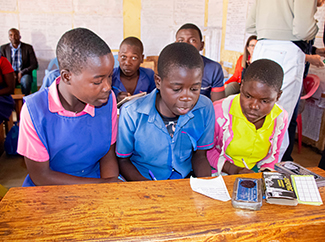
At the heart of the project is the TRIO methodology, a structured, child-centred approach in which learners are organised into permanent groups of three. Each TRIO brings together learners with different abilities, creating opportunities for peer learning and mutual support. Within their groups, learners discuss concepts, solve problems, explain ideas to one another, and work together before sharing their responses with the wider class. Each learner has a defined role, helping to ensure participation is shared and that learners are not left behind.
The approach also changes the teacher's role. Instead of being the sole source of knowledge, teachers become facilitators who guide discussions, monitor learning, provide targeted support and assess learners throughout the lesson. This creates more opportunities for learners to participate, increases time on solving tasks and enables teachers to respond more effectively to different learning needs.
The impact has been profound. An internal impact assessment of 117 surveyed teachers found that 82% had received formal TRIO training, and 71% reported a significant increase in their use of learner-centred methods. Furthermore, 51% noted a significant improvement in their ability to provide differentiated support for children with diverse learning needs.
The project's true success shines through learners' experiences. All surveyed children confirmed they work in TRIO groups, with 30% participating daily and 67% several times a week. Crucially, every learner said they learn better in groups, and 84% of teachers observed a significant boost in active engagement. This collaborative environment directly supports foundational skills: 60% of learners report reading easily, and 74% say they always complete their mathematics exercises. This newfound confidence is paving the way for a brighter future.
RELATED NEWS