consent_cookie
Duración: 1 year
Stores the user's cookie consent state
14-10-2026
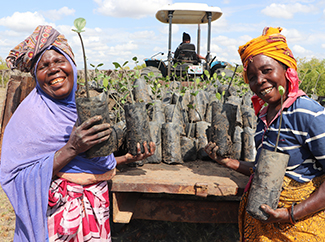
As the global community marks the dual milestones of the International Day of Rural Women (15 October) and the International Day for the Eradication of Poverty (17 october), Humana People to People is calling on national governments and funding partners to scale up targeted investments in rural women. Crucially, this year’s combined commemoration aligns with the UN International Year of the Woman Farmer, putting a sharp global focus on the structural barriers female smallholder farmers face and the sustainable solutions they are leading.
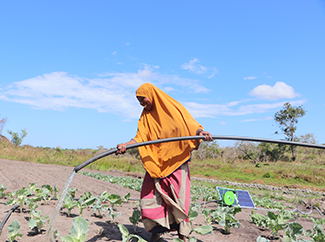
For Humana People to People, the intersection of gender equality and building people’s capabilities to fight poverty is not a theoretical framework; it is a daily, continuous action across our global agricultural programmes. Women smallholder farmers need support to adopt climate-resilient farming practices as food producers. They are the pillars of rural food systems and guardians of our biodiversity.
Rural women are the backbone of global agriculture, yet they disproportionately bear the burden of multi-dimensional poverty. They face systemic gaps in land ownership, financial services, education, and climate-adaptive technologies.
Humana People to People’s sustainable agriculture initiatives are grounded in a simple, foundational truth: when you empower a rural woman farmer, you secure a community’s food supply and permanently disrupt local cycles of poverty. By organising women into self-reliant structures, our programmes convert invisible, unpaid agricultural labour into recognised economic power.
Interconnected priorities
To drive systemic change, Humana People to People aligns its work across three interconnected priorities.
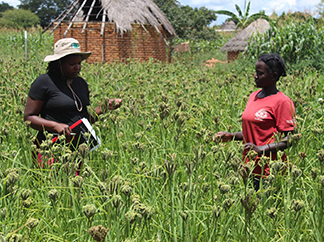
Zimbabwe, like many other Global South countries, continues to face worsening climate change impacts that are affecting rural women, who are central to food production and rural development. In responding to the challenge, DAPP Zimbabwe is implementing Farmers Clubs programmes in 6 districts, including Hwedza, where Farmers Clubs Hwedza is engaging 1,000 smallholder farmers to promote the adoption of climate-resilient agricultural practices that strengthen food security, household nutrition, and income. At the heart of the project are rural women farmers who lead climate action, protect the environment, grow drought-tolerant crops, and expand small livestock production through poultry, rabbits, and fish farming to improve their lives.
The progress achieved by rural women underscores what is possible, yet significant structural gaps remain. To win against poverty, local successes must be matched by sustained national and international backing.
Humana People to People urges national governments to implement gender-responsive agricultural policies that protect women’s land rights and expand access to rural extension services. We simultaneously call on our funding partners and donors to direct flexible, long-term capital toward rural women-led agricultural initiatives. Investing in the woman farmer is the single most effective lever for building resilient communities, striving to end poverty, and securing our shared climate future.
International Day of the Girl Child
On 11 October, in the International Day of the Girl, the global community is called to face an undeniable truth: girls are being forced into early marriage at an alarming rate, and slow progress pushes us to ask the question of what needs to be done for the millions of girls around the world who still live in conditions that limit their potential.
RELATED NEWS